The wattage gap between these panels is small, so the highest number is not automatically the best purchase. You will be able to compare panel count, roof space, inverter compatibility, real-world energy yield and total installed cost before choosing a model.
Key takeaways
- Choose higher wattage when roof space or installation costs limit capacity.
- Check panel dimensions, voltage, current and inverter limits before buying.
- Nameplate watts do not predict annual energy without location and system conditions.
- Compare complete installed cost per usable square metre, not panel price alone.
The wattage difference is small—so when is a higher rating worth paying for?
Yes, but only when the higher rating solves a real design problem. The answer to “are 540w 545w 555w adani panels worth it” is usually the model with the lowest installed cost per usable square metre and acceptable inverter compatibility.
If dimensions and technology match, 545 Wp adds only about 0.9% over 540 Wp; 555 Wp adds about 2.8%. That difference rarely justifies a large premium.
| Rating | Difference from 540 Wp | Practical advantage | Choose it when |
|---|---|---|---|
| 540 Wp | Baseline | More availability or lower price | The roof has enough area and the inverter accepts its voltage and current |
| 545 Wp | About 5 W per module | Slightly more capacity in the same module count | Its price and electrical specifications remain competitive |
| 555 Wp | About 15 W per module | More capacity per module and potentially one fewer panel | Roof area, mounting space or installation labour is genuinely limited |
The practical 540w versus 545w solar panel decision is rarely about energy yield alone. For a roughly 10 kWp array, 19 panels produce 10.26 kWp at 540 Wp, 10.355 kWp at 545 Wp, while 18 panels produce 9.99 kWp at 555 Wp.
One fewer panel can reduce rails and DC connections, but a larger module, higher price or unchanged inverter strings can erase that saving.
All figures are nameplate output under standard test conditions, not continuous Nagpur rooftop production. Heat, shade from a parapet or water tank, dust and wiring losses can outweigh 15 W; check the shade pattern before paying for the highest rating.
Check the exact datasheet before matching a panel to your roof and inverter
A 555 Wp module fits your installation only if its dimensions, weight, voltage and current match the roof layout and inverter. Do not compare “540 W”, “545 W” and “555 W” as labels alone: obtain the exact Adani model number and datasheet.
| Specification | Compare on the datasheet | Why it matters |
|---|---|---|
| Dimensions | Length and width, including mounting clearances | Determines row spacing, roof coverage and whether one fewer panel is possible |
| Weight | Kilograms per module | Sets rail, fastener and roof-load requirements |
| Efficiency | Percentage and watts per square metre | Shows how much output you obtain from limited roof area |
| Vmp and Voc | Maximum-power voltage and open-circuit voltage | Must fit the inverter’s MPPT voltage range and maximum DC voltage |
| Imp and Isc | Operating and short-circuit current | Must stay within the inverter’s MPPT and input-current limits |
| Temperature coefficients | Power, Voc and Isc coefficients, stated as %/°C | Predicts voltage and output changes during hot and cold conditions |
| Warranty and degradation | Product warranty and guaranteed year-by-year output | Separates similar nameplate ratings with different long-term protection |
Check these items before approving the layout:
- Count modules against the inverter’s MPPT string range; a string with too few or too many panels can fall outside its operating voltage.
- Confirm roof load, wind fixing, drainage gaps and maintenance access.
- Compare efficiency and usable area, not only watts. The best Adani panel wattage is the one that solves your space or inverter constraint at the lowest installed cost.
Nameplate watts are not the same as annual rooftop energy
A 555 W label is a maximum-power rating measured under standard test conditions, not the output you will receive continuously on a Nagpur roof. High cell temperature, dust, weak irradiance, wiring loss, inverter efficiency, clipping and downtime all reduce annual production.
A chimney, parapet, water tank or neighbouring building can shade a small section and cut more energy than the 15 W difference between 540 W and 555 W modules. Check shade at different times of day and seasons before choosing a panel; orientation and tilt matter just as much.
Module efficiency tells you how much power fits into each square metre. A physically larger 555 W module might offer no roof-space advantage over a smaller 540 W module if both produce similar watts per square metre.
Compare the exact dimensions and efficiency, then use PVWatts or a comparable production model rather than multiplying panel watts by assumed sunshine hours.
The claimed 555w solar panel benefits include fewer modules and fewer DC connections in some designs, but larger modules can require different rail spacing, handling and string layouts. MBB, 10BB and smart soldering describe construction features, not guaranteed annual yield.
| MBB | Multiple busbars that collect current across each cell | Can reduce resistive loss and limit damage from a cracked cell |
|---|---|---|
| 10BB | Ten busbars per cell | A busbar-count detail to compare on the datasheet |
| Smart soldering | A cell-interconnection method designed to reduce stress and resistance | Valuable only when supported by tested performance and warranty data |
How many panels and how much roof area do 3 kW, 5 kW and 10 kW systems need?
A 3 kW system needs six panels in all three ratings, while a 10 kW system needs 19 panels if the design targets at least 10 kWp of module capacity. The roof area depends on the exact module dimensions, so allow about 2.6–3.0 square metres per large panel, including spacing and access paths.
| System | 540 W panels | 545 W panels | 555 W panels |
|---|---|---|---|
| 3 kW | 6 panels; 15.6–18 m² | 6 panels; 15.6–18 m² | 6 panels; 15.6–18 m² |
| 5 kW | 10 panels; 26–30 m² | 10 panels; 26–30 m² | 10 panels; 26–30 m² |
| 10 kW | 19 panels; 49.4–57 m² | 19 panels; 49.4–57 m² | 19 panels; 49.4–57 m² |
These are planning figures, not a substitute for the datasheet’s length and width. A physically larger 555 W module can occupy the same roof area as a smaller 540 W panel, cancelling its area advantage.
Choose the best Adani panel wattage from your load, roof and equipment together. Size the system from annual electricity use, then check that the inverter accepts the panel’s maximum-power voltage and operating current on each MPPT. Do not exceed the inverter’s permitted DC input or the roof’s structural load.
The 540w versus 545w solar panel difference rarely removes a panel. Choose 555 W when one fewer module, tighter roof packing or higher output per square metre solves a real constraint; choose 540 W or 545 W when their price, current compatibility, availability or handling is better.
Judge Adani panel value by the complete installed system
For adani solar panel value, compare the complete system cost per installed kW and the predicted annual kWh—not the panel price alone. The question “are 540w 545w 555w adani panels worth it” has a practical answer: select the lowest-cost model that fits your roof, inverter and programme rules.
| Rating | Best use | Main caution |
|---|---|---|
| 540 Wp | Better price, current compatibility or availability | Needs more modules for the same system size |
| 545 Wp | Balanced choice when layout and quotation are similar | The extra 5 W rarely justifies a premium |
| 555 Wp | Tight roofs where one fewer module solves the layout | Check higher current, larger dimensions, weight and handling |
Require every quotation to state:
- Exact module model number, factory datasheet, dimensions, weight, Vmp, Voc, Imp, Isc and temperature coefficients.
- Mounting rails, fasteners, DC isolator, string fuses, surge protection, AC protection, earthing, cables, monitoring, transport and installation labour.
- Product warranty, guaranteed degradation, workmanship coverage and the process for handling a failed module.
- A PVWatts or comparable annual-kWh estimate that includes orientation, tilt, shade, temperature, soiling, inverter clipping and downtime.
- Written confirmation that the exact model appears on the Ministry of New and Renewable Energy’s Approved List of Models and Manufacturers (ALMM), plus any utility requirement for your programme.
RDC INFOTECH can be asked to put these items beside the module price, making a cheaper but incomplete quotation easier to reject. A subsidy claim also depends on eligible equipment and documented installation, not a dealer’s verbal approval.
Related product
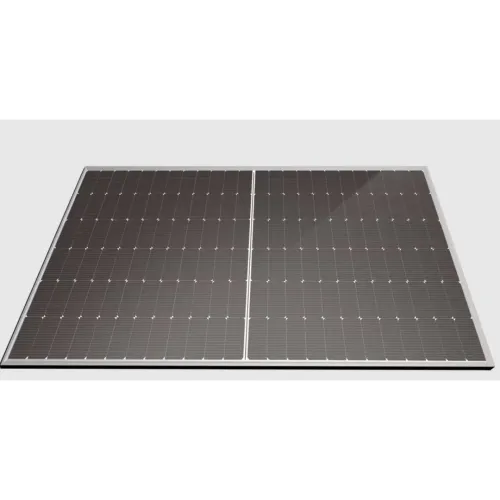
 | Solar Panel 540 WP, 545 WP, 555 WP Adani Solar Panels MBB cell technology with 10BB, smart soldering MBB cell technology with 10BB, smart soldering MBB cell technology with 10BB, smart soldering Maximum... View product → |
Frequently asked questions
When is a higher-rated Adani panel worth paying for?
A higher-rated panel is worth paying for when it reduces roof area, mounting work or the number of panels without creating inverter compatibility problems.
What should you check on an Adani panel datasheet?
Check exact panel dimensions, maximum power, voltage at maximum power, current at maximum power, open-circuit voltage, short-circuit current and the panel's temperature coefficients.
Do 540W, 545W and 555W panels produce the same annual energy per panel?
No. Nameplate wattage is measured under test conditions; annual rooftop energy also depends on sunlight, temperature, shading, orientation, tilt, soiling, wiring and inverter losses.
How many panels do 3kW, 5kW and 10kW systems need?
Using 540W to 555W panels, a 3kW system needs about 6 panels, a 5kW system needs about 10 panels, and a 10kW system needs about 19 panels, subject to the final design.
How should you judge Adani solar panel value?
Compare the complete installed system, including panels, inverter, mounting structure, protection devices, wiring, installation, approvals, warranty terms and expected usable energy.
Keywords