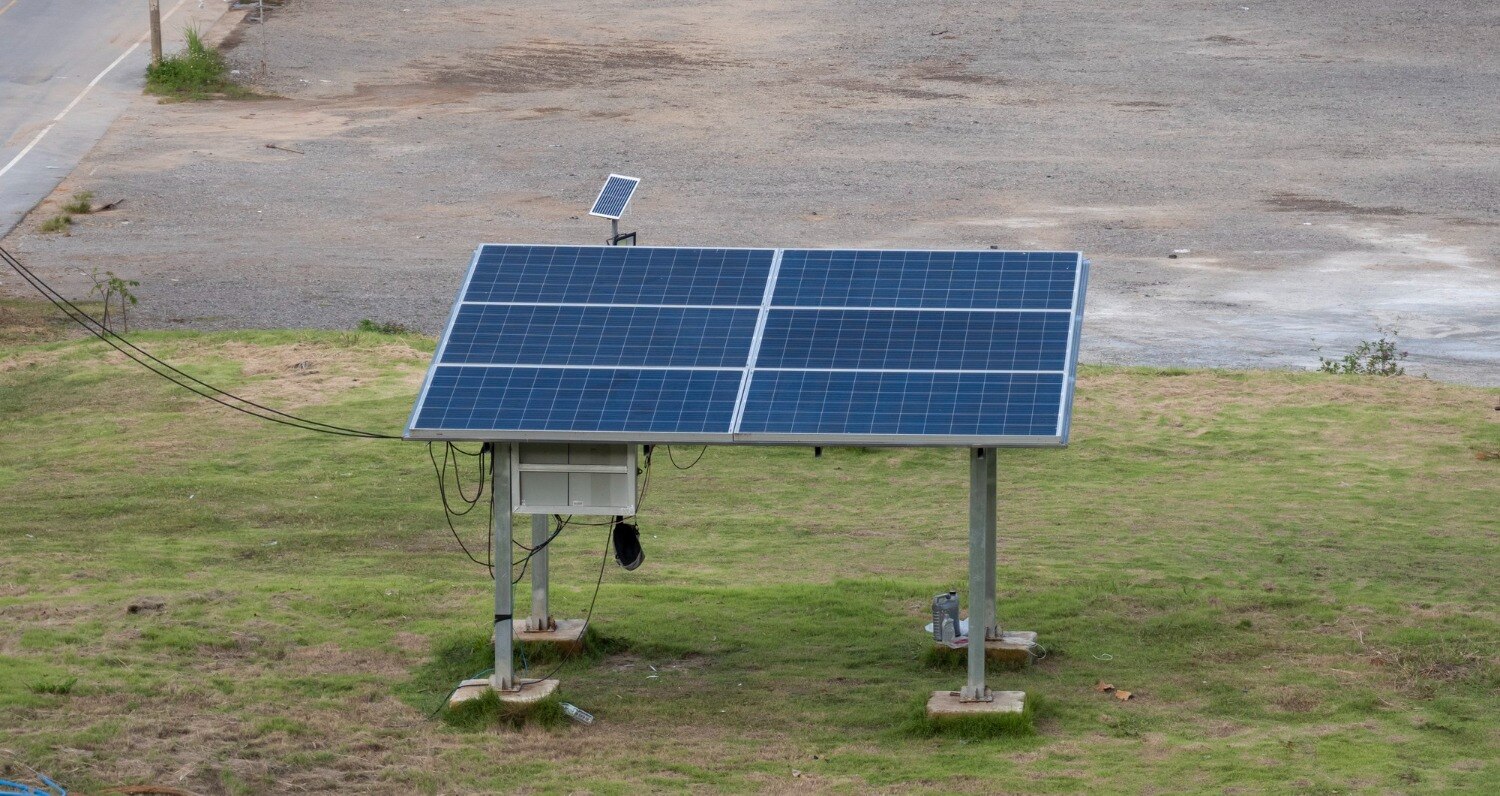
A 625 W module can reduce panel count, but its suitability depends on the quoted model’s dimensions, electrical limits, roof structure and the energy your business uses during daylight. You will be able to test roof capacity, estimate realistic Nagpur generation and compare a 625 W design with 605 W or 610 W alternatives before approving a quotation.
Key takeaways
- Confirm the exact Adani 625 W model, datasheet and warranty before comparing quotes.
- Measure usable roof area, access paths, setbacks and shade before counting panels.
- Allow for Nagpur heat, dust, monsoon conditions and partial shade in output estimates.
- Compare structure, inverter, cabling, protection, approvals and installation—not only panel prices.
Confirm the exact Adani 625 W module before comparing quotations
A 625 watt commercial solar panel is rated at 625 W under Standard Test Conditions (STC): 1,000 W/m² irradiance, 25°C cell temperature and AM1.5 spectrum. That figure is not a complete specification for a Nagpur commercial roof, where heat, roof loading and inverter limits affect the design.
Require every quotation for Adani panels for commercial buildings to name the exact module model and attach its current datasheet showing:
- Module dimensions, weight, rated voltage, operating current and maximum system voltage
- Temperature coefficient, efficiency and connector type
- Mechanical-load rating, fire classification, bifacial rating and product and performance warranties
Two 625 W variants can need different string lengths because their voltage and current values differ. Their dimensions can change roof rows and turning space, while weight and mechanical-load limits affect lifting, rails and handling procedures.
| Variant | Design difference | Risk if ignored |
|---|---|---|
| 625 W, higher voltage | Fewer modules per string may reach the inverter limit sooner | Excessive cold-weather string voltage |
| 625 W, higher current | Different MPPT and fuse requirements | Inverter input or protection mismatch |
| 625 W, larger or heavier | Fewer panels but more difficult transport and layout | Roof access, lifting and structural problems |
Check the exact model’s status on India’s Approved List of Models and Manufacturers when ALMM compliance applies. Do not treat a familiar brand name or 625 W label as proof of eligibility.
Work out how many panels the roof can actually hold
Convert only the roof’s usable area into panel count. For solar panels for business roofs in Nagpur, begin with a scaled roof plan, not the total slab area. A 625 W module gives 0.625 kW DC, so 16 panels make 10 kWp, 40 make 25 kWp, and 160 make 100 kWp.
A quote for a 625Wp Adani solar panel commercial in Nagpur must use the exact model datasheet.
| Option | Panel count for 100 kWp | Roof and handling implication |
|---|---|---|
| 625 W | 160 | Fewer modules and racking positions; larger units can complicate lifting, transport, turning and layout |
| 610 W | 164 | Four more modules than 625 W; compare delivered energy and labour |
| 605 W | 166 | Six more modules than 625 W; potentially more rows, clamps and cable runs |
If each selected module measures about 2.4 m by 1.3 m, bare module area is 160 × 3.12 = 499.2 m², or roughly 500 m².
Use the quoted datasheet’s exact dimensions; the final roof requirement is larger after excluding parapets, edge setbacks, maintenance walkways, fire-access routes, water tanks, HVAC units, skylights, inverter space and shaded zones.
Require the drawing to show:
- Usable area and every excluded area
- Module rows and row spacing
- Maintenance and fire-access paths
- Lifting route, turning space and inverter location
A larger 625 W panel saves count only if the roof, structure and handling plan can accommodate it.
Estimate Nagpur output under heat, dust, monsoon and partial shade
Do not estimate annual energy by multiplying panel watts by sunshine hours. For a 625 watt Adani solar panel for commercial roof in Nagpur, start with panel count × 0.625 kW, then model Nagpur’s solar irradiance, azimuth, tilt and hourly shading. Apply losses for temperature coefficient, soiling, mismatch, wiring, inverter efficiency, availability and clipping.
- Use STC as the reference: 1,000 W/m² irradiance, 25°C cell temperature and AM1.5 spectrum.
- Reduce output for exposed rooftop cells running hotter than ambient; heat lowers voltage and power.
- Include monsoon cloud, dust, bird droppings and the cleaning access needed to control soiling losses.
- Put different orientations and shaded roof sections on separate strings or MPPT inputs.
- Check cold-weather open-circuit voltage below the inverter’s maximum DC voltage, then check hot-weather operating voltage inside its MPPT range.
- Record the DC/AC ratio and clipping assumption. A 100 kWp array with a 75 kW inverter has a 1.33 DC/AC ratio, not a 100 kW AC plant.
Bifacial gain needs rear-side light: modules must stand above a reflective, unobstructed surface with spacing between rows. A closely mounted 625 watt commercial solar panel on dusty concrete receives little useful rear illumination, so do not count a generic bifacial bonus.
Ask for monthly and annual kWh, degradation, shading hours and loss percentages rather than a nameplate promise. Compare delivered kWh per usable roof area, not watts alone.
Check roof structure, wind resistance and electrical compatibility
Before modules are placed, obtain structural approval for the roof and electrical approval for the complete system. This applies to adani panels for commercial buildings and to any solar panels for business roofs in Nagpur.
1. Ask a structural engineer to inspect the concrete slab or metal sheet, corrosion, attachment points and drainage. The engineer must review the quoted module’s dimensions and weight, rails, cable trays, ballast, concentrated loads, wind uplift and maintenance access using the manufacturer’s design data.
Do not substitute a generic panel-weight assumption for the selected model and mounting design.
2. Require the electrical design to verify string fuse ratings, short-circuit current, MPPT voltage and current windows, maximum DC voltage, DC and AC isolators, surge protection, earthing, anti-islanding and utility protection. Check the inverter against the complete array, not simply a 625 W module.
3. Obtain the serving Maharashtra DISCOM’s decision on sanctioned load, net metering or another interconnection arrangement before finalising export assumptions, inverter sizing or the single-line diagram. Panel count alone cannot determine approved AC inverter capacity; daytime load, export limits and protection requirements also control it.
A system installed without this approval can leave surplus generation uncredited or require redesign.
Compare a complete 625 W proposal, not a panel price
A 625 Wp Adani solar panel commercial in Nagpur is the right choice only when it delivers more energy from each usable square metre at an acceptable lifecycle cost. Ask whether the site’s daytime load can consume that generation; low daytime demand shifts value toward export rules, metering and Maharashtra DISCOM approval.
A 100 kWp DC array with a 75 kW AC inverter has a 1.33 DC/AC ratio and will clip output above 75 kW.
Require the quotation to include:
- Exact model number and datasheet; module count; kWp DC; kW AC; annual kWh; DC/AC ratio and clipping.
- Scaled roof drawing showing usable area, setbacks, rows, walkways, fire access, tanks, HVAC, skylights, inverters and cable routes.
- Structural approval covering slab or sheet condition, wind uplift, rails, ballast, drainage and maintenance loads.
- String layout, MPPT compatibility, temperature and soiling assumptions, degradation, monitoring, cleaning, maintenance, warranties, exclusions and exported-energy treatment.
| Option | Compare in the quotation | Main trade-off |
|---|---|---|
| 625 W | Annual kWh per usable m²; installed cost/kWp | Fewer modules, but greater lifting and handling effort |
| 610 W | Same metrics and inverter compatibility | Moderate module count and layout flexibility |
| 605 W | Same metrics and lifecycle cost | More modules, racking positions and labour |
RDC INFOTECH is useful here if it supplies a model-specific survey, structural and electrical design, DISCOM documents and line-by-line comparison. Choose the 625 watt commercial solar panel only when the roof, load profile and approved interconnection support it—not because its nameplate is largest.
Related product
 | Solar Panel 625WP, 605WP, 610WP Adani Solar Panel 16 Bus Bar N-Type TOPCon Technology Solar Cells Enhanced Performance during high temperature condition Bifaciality Upto 85% Longer Product life and... View product → |
Frequently asked questions
What should you confirm before buying an Adani 625 W panel?
Ask each supplier for the exact module model, datasheet, STC ratings, dimensions, efficiency, temperature coefficient, warranty terms and certification details. Do not compare quotations that use only the phrase “Adani 625 W.”
How do you calculate how many 625 W panels fit on a commercial roof?
Start with the roof’s usable area after removing equipment, walkways, fire access, setbacks and shaded zones. Then check the module dimensions, row spacing, maintenance access and the roof layout before calculating system capacity.
How much electricity can a 625 W panel produce in Nagpur?
Actual generation is lower than the 625 W STC rating because cell temperature, dust, monsoon clouds, wiring losses, inverter efficiency and partial shade reduce output. Request a site-specific estimate using roof orientation, tilt, shading and local weather data.
What should a complete commercial solar quotation include?
Compare the panels with the mounting structure, wind-load design, inverter, DC and AC cables, connectors, earthing, lightning protection, monitoring, approvals, installation, testing, commissioning, warranties and maintenance terms.
Keywords