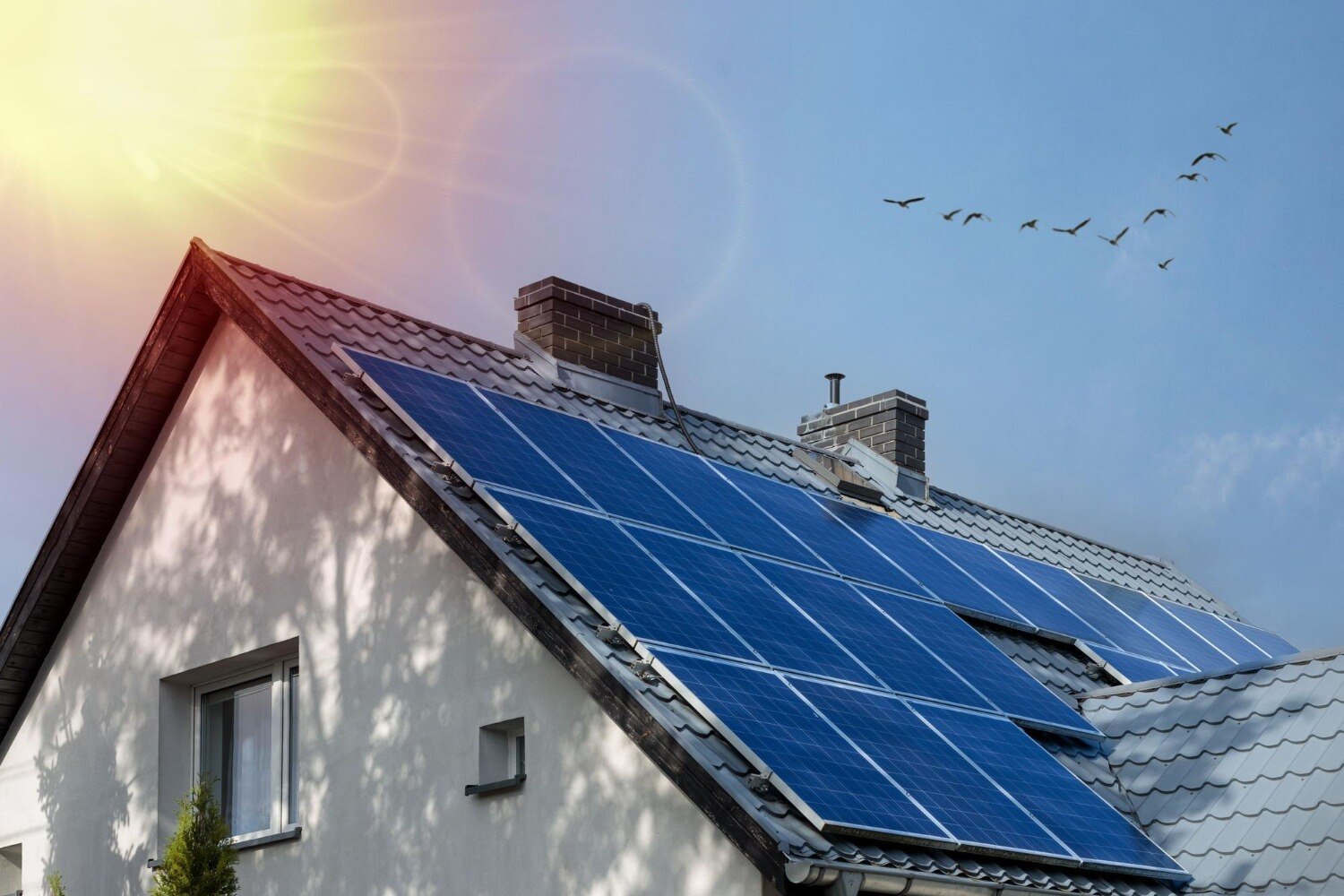
Nagpur’s 40–45°C summer air can push rooftop solar cells far above their rated test temperature, while dust, monsoon water and storm loading create separate risks. By comparing model-specific temperature data, roof design, cleaning practices, mounting requirements and inverter sizing, you can decide whether an Adani panel suits your site rather than relying on wattage alone.
Key takeaways
- Compare temperature coefficients, not only panel wattage.
- Allow for cell temperatures of 60–75°C during peak Nagpur summer.
- Specify cleaning access, roof airflow and drainage before installation.
- Demand warranty, datasheet, degradation and installation details in writing.
How Nagpur heat changes the output of each Adani panel
A module rated at 25°C loses power as its cells heat up, even under strong Nagpur sunlight. With summer air temperatures around 40–45°C, roof-mounted cells can reach 60–75°C because they run 20–30°C above ambient. The relevant temperature is cell temperature, not the weather-app reading.
For solar panels during hot weather in nagpur, compare the exact temperature coefficient of maximum power, written as %/°C. A coefficient of −0.29%/°C loses about 11.6% after a 40°C cell-temperature rise; heat losses still occur with a better coefficient.
The phrase adani solar panel for benefits in nagpur weather should lead you to a model datasheet, not a brand-level assumption.
| Figure to compare | Why it matters | What to verify |
|---|---|---|
| Temperature coefficient, Pmax | Estimates power lost above 25°C | Exact value, such as −0.29%/°C |
| NOCT or NMOT | Indicates operating temperature in real conditions | Test method and stated temperature |
| Rated power and efficiency | Shows output and roof area required | 625 Wp, 610 Wp, 605 Wp, or the exact model rating |
| Cell technology | TOPCon and 10BB MBB designs respond differently to heat and degradation | Named cell architecture, not just “Adani” |
| Operating-temperature range | Checks whether the module suits local exposure | Datasheet limits and warranty exclusions |
A lower absolute coefficient helps, but it does not guarantee higher annual generation. Compare the coefficient, NOCT, efficiency, shading, ventilation and soiling assumptions for each quotation.
Dust, roof airflow and cleaning determine real summer yield
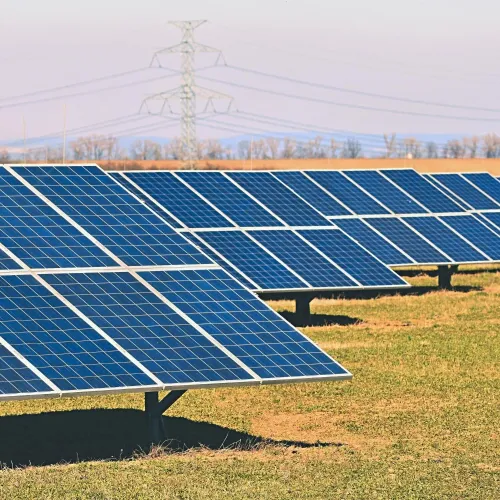
Solar panels during hot weather in Nagpur need airflow beneath the modules, not just strong sunlight above them. Summer air can reach 40–45°C, while cells run another 20–30°C hotter in direct sun. A flush-mounted panel holds heat against the roof; a clear mounting gap lets wind carry some of it away.
A high parapet, blocked rear ventilation or a dark roof can therefore reduce yield even with the same module and irradiation.
Dust creates a separate loss. Fine soil, soot and construction debris form a film that shades the glass, and low-tilt arrays retain more of it after dry spells. A dusty commercial roof or building site needs closer inspection than a clean residential roof.
Choosing Adani solar panels for weather in Nagpur does not remove this soiling loss; the site decides how quickly it accumulates.
Clean when the glass shows a continuous dusty film, bird droppings cover active cell areas, or measured daily generation falls below a comparable clear-day baseline after shading and grid interruptions are excluded. Do not promise yourself a fixed monthly schedule.
- Clean in the early morning or evening, after the glass has cooled.
- Use clean water and a soft, non-abrasive brush; grit dragged across hot glass can scratch it.
- Avoid walking on modules, pressure-washing connectors and cleaning during lightning or on a slippery roof.
- Inspect again after nearby construction, strong dry winds or the first rain, which can leave mud marks rather than remove dust.
Monsoon rain, wind and hail require more than a weather-rated module
A weather-rated module does not stop a monsoon from lifting a weakly fixed array or flooding a poorly sealed roof. Adani panel reliability in Nagpur depends on the roof, mounting structure and electrical protection being designed as one system. Hail resistance also needs evidence in the module datasheet, not a verbal assurance.
Check these installation details before approving the work:
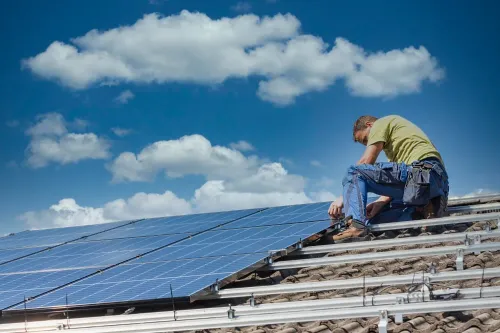
- Roof condition: repair cracked sheets, loose tiles and rusted metal before fixing rails. The roof must carry the array and resist wind uplift without damaging its waterproof layer.
- Mounting design: require site-specific wind-load calculations, corrosion-resistant rails, correctly spaced anchors and fixings suited to your roof material. Do not accept a generic frame layout.
- Water management: keep drainage channels open, seal every roof penetration with a compatible flashing or sealant system, and prevent cables from forming water-trapping loops.
- Hail and rain: ask for the module’s IEC 61215 qualification and the manufacturer’s hail-test information. IEC 61215 covers environmental durability; IEC 61730 covers module safety.
- Electrical protection: bond the aluminium frame and rails to the earthing system, use correctly rated DC and AC surge protective devices, and coordinate them with the building’s lightning-protection design.
- Cable and connector routing: use outdoor-rated cable clips and enclosures, keep connectors above standing water, and never leave DC connectors lying on the roof.
Adani solar panels for weather in Nagpur are only as dependable as this supporting work. Inspect after the first severe storm for loose clamps, exposed cable, blocked drainage and new leakage.
Bifacial gain and panel wattage depend on the roof, not the label
A 625 Wp module is not automatically the better choice than a 545 Wp module. Compare the exact datasheets, because roof area, temperature coefficient, rear-side light, degradation rate and warranty can outweigh the nameplate difference. Treat “adani solar panel for benefits in nagpur weather” as a search phrase, not a performance metric.
| Model group | Main comparison | Site implication |
|---|---|---|
| 625 Wp, 605 Wp, 610 Wp TOPCon | Higher output per module; verify temperature coefficient, dimensions, weight, bifacial rating and warranty | Fewer modules and less roof area, but only worthwhile if the roof structure, inverter and spacing support them |
| 540 Wp, 545 Wp, 555 Wp 10BB MBB | Lower output per module; verify cell layout, coefficient, degradation guarantee and mechanical-load rating | More modules and area for the same system size, which can help when replacement compatibility or budget matters |
| Any listed model | Compare annual yield, not wattage alone; obtain the installer’s shading, temperature and soiling assumptions | Select the option producing more usable kilowatt-hours on your roof |
A lower temperature coefficient, such as −0.29% per °C, reduces heat loss but does not remove it: a 40°C cell-temperature rise still means about 11.6% power loss before inverter, wiring and dust losses. Bifacial gain also requires rear-side light; dark roofing, tight rows and low clearance can make a glass-glass module’s extra cost pointless.
Ask for the exact model datasheet, serial traceability, warranty document and certificate details. That is the evidence behind adani panel reliability in nagpur, not the wattage printed in a quotation.
What to demand in an Adani panel quotation for a Nagpur system
Ask for the exact Adani model number before comparing prices. For Adani panel reliability in Nagpur, a generic product page is not evidence: cell technology, temperature coefficient, load rating and warranty terms differ between models. For Adani solar panels for weather in Nagpur, demand documents that identify the module and the installation assumptions.
| Quotation item | What to demand | What it verifies |
|---|---|---|
| Exact module | Model datasheet, rated power, temperature coefficient, maximum system voltage, current and mechanical-load rating | Whether the proposed panel suits your heat, inverter and roof |
| Traceability | Serial-number format, invoice, country-of-origin record and certificate copies, including IEC 61215 and IEC 61730 where claimed | Whether supplied modules match the quoted product |
| Warranty | Product warranty, linear power warranty, degradation schedule and claim procedure | Who is responsible when output or hardware fails |
| System design | Site-specific annual-yield calculation showing cell-temperature loss, dust, inverter, cable and mismatch losses | Whether “high-temperature performance” has been quantified |
| Electrical design | String voltage and current at temperature extremes, inverter sizing, cable voltage drop, earthing and DC/AC surge-protection schedule | Whether the system can operate safely during Nagpur storms |
| Roof and mounting | Wind-load calculation, fixing layout, roof-penetration detail, drainage clearance and rear-air-gap drawing | Whether rainwater, wind or blocked ventilation will damage performance |
Ask RDC INFOTECH to show the assumptions behind its yield estimate, not only the final kWh figure. Reject a quotation that omits roof loading, connector routing, standing-water clearance or serial-number records; those omissions prevent you from checking both panel quality and installer competence.
Related products
 | Solar Panel 625WP, 605WP, 610WP Adani Solar Panel 16 Bus Bar N-Type TOPCon Technology Solar Cells Enhanced Performance during high temperature condition Bifaciality Upto 85% Longer Product life and... View product → |
 | Solar Panel 540 WP, 545 WP, 555 WP Adani Solar Panels MBB cell technology with 10BB, smart soldering MBB cell technology with 10BB, smart soldering MBB cell technology with 10BB, smart soldering Maximum... View product → |
Frequently asked questions
How does Nagpur heat affect Adani solar panel output?
Panel ratings use a cell temperature of 25°C. In Nagpur summer, cells can reach 60–75°C, reducing output according to the module’s temperature coefficient. Compare that coefficient before choosing between panels.
How do dust, roof airflow and cleaning affect summer yield?
Dust blocks sunlight, while a tightly enclosed panel runs hotter. Leave airflow beneath the modules, provide safe cleaning access and set a cleaning plan based on local dust and roof conditions.
Are weather-rated Adani panels enough for Nagpur monsoon, wind and hail?
Check the module’s published mechanical-load ratings, junction-box protection, mounting design, clamps and roof anchoring. A weather rating does not replace correct installation or drainage.
Does bifacial technology or higher wattage guarantee more energy on a Nagpur roof?
No. Bifacial gain depends on roof reflectivity, panel height, row spacing and shading. Higher wattage also depends on module dimensions, inverter limits, roof area and the final layout.
What should an Adani panel quotation for Nagpur include?
Request the exact model number, wattage, datasheet, temperature coefficient, product and performance warranties, degradation terms, mounting specification, inverter details, installation scope and applicable taxes.
Keywords