A flat owner does not qualify simply because the building is residential or has a shared terrace. Eligibility follows the electricity consumer account, the ownership and use of the roof, and the route used for the solar installation. By the end, you will know whether to apply as an individual, involve your housing society, or first resolve a meter and roof-rights issue.
Key takeaways
- Your flat needs its own residential electricity meter and consumer number.
- Society solar systems follow different rules from individual flat applications.
- The subsidy is linked to the residential meter, not apartment ownership alone.
- Confirm vendor registration, net-metering approval, and commissioning documents before payment.
When can an individual flat owner claim the subsidy?
The answer to can apartment residents apply for domestic solar subsidy in nagpur is yes, but only when the flat has its own residential electricity connection and the photovoltaic system is linked to that consumer number. Domestic rooftop solar subsidy eligibility follows the electricity account, not proof that you live in the building.
1. Check that you are the electricity-account holder or satisfy the PM Surya Ghar portal’s ownership and account requirements. A sale deed, rent agreement or residence proof alone does not create eligibility.
2. Obtain written permission for the roof. Owning a top-floor flat does not automatically give you terrace ownership unless the registered sale documents or society rules grant exclusive rights.
3. If panels will stand on a shared roof, secure a written housing-society resolution or roof-owner permission. Record who owns the system, who maintains it and which meter receives the generation.
4. Confirm the arrangement with the electricity distribution company before ordering equipment. A plant credited to one flat’s residential meter is different from one serving the lift, staircase lights, security system or water pump through a common meter.
The application, photovoltaic system and electricity account must match. A society’s common meter is not automatically a domestic consumer connection for an individual claim; the society must examine its separate common-facility route. Living in an apartment, without matching account and roof permission, does not by itself qualify you for the subsidy.
How is a society project different from an individual application?
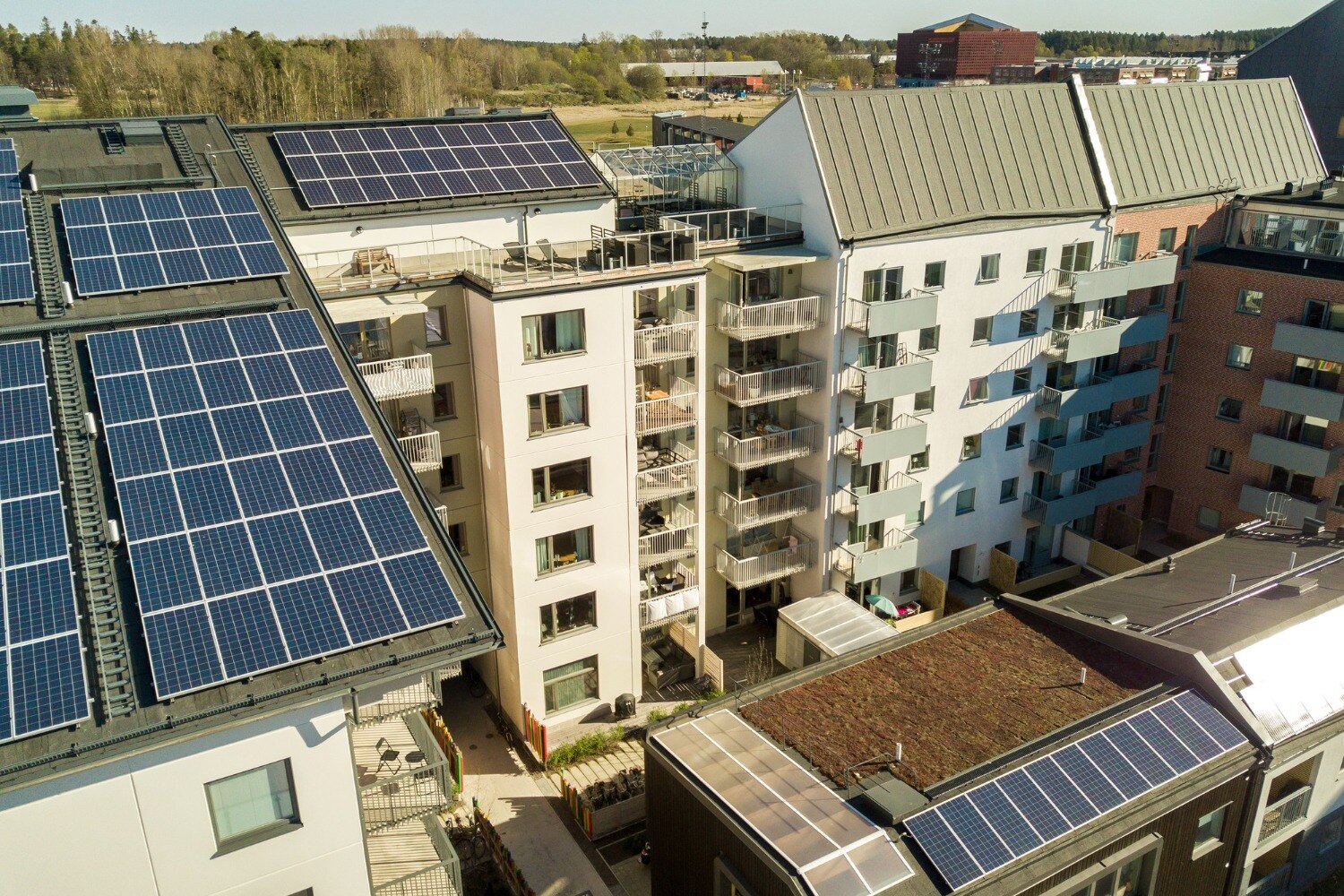
A registered housing society or Resident Welfare Association (RWA) can pursue Central Financial Assistance for a rooftop plant serving eligible common facilities. This society route can cover the lift, staircase and corridor lighting, security systems, water pumps and electric-vehicle charging, subject to the electricity account and DISCOM requirements.
Before applying, the society should:
- Approve roof access through a written resolution.
- Identify the common-area consumer connection and check its printed category.
- Appoint an authorised representative for the application and DISCOM correspondence.
- Record which common loads will receive the generation.
- Decide how savings, maintenance and plant performance will be recorded.
The central assistance rate for a Group Housing Society or RWA is ₹18,000 per kW of eligible common-facility capacity. The project limit is the lower of 500 kW or 3 kW per dwelling. That ceiling applies to the society project; it does not give every apartment a separate ₹78,000 entitlement.
Society assistance is not cash for distribution among members, which is a key point when evaluating housing society solar subsidy in Nagpur.
A common roof with panels does not automatically create an individual-resident claim. Check whether the common meter qualifies under the society route; it is not automatically accepted as a domestic consumer connection for a flat owner's application.
MSEDCL, or the DISCOM named against that account, must confirm eligibility for the account and proposed loads before the society commits to solar subsidy assistance for apartments.
What subsidy amount applies to an eligible residential meter?
₹30,000 per kW applies to the first 2 kW of an eligible residential electricity connection in Maharashtra, and ₹18,000 applies to the third kW under PM Surya Ghar. A 1 kW system receives ₹30,000; 2 kW receives ₹60,000; and 3 kW reaches the maximum central subsidy of ₹78,000 per residential connection.
- Treat capacity above 3 kW as non-increasing for central assistance: a 4 kW or 5 kW plant does not raise the ₹78,000 cap, so the subsidy represents a smaller share of the project cost.
- Tie the calculation to the eligible residential consumer account, not the number of residents in the flat or apartments in the building.
- Ask for a written calculation naming the meter number, system size, applicant category and scheme route.
- Check that the domestic rooftop solar subsidy eligibility is based on a residential meter, not a commercial, institutional or society common meter.
- Keep taxes, meter work, installation extras and any capacity above the subsidised limit separate from the central assistance figure.
For a society common-facility project, use ₹18,000 per kW and the lower of 500 kW or 3 kW per dwelling. That separate Group Housing Society or RWA ceiling does not give each member an individual ₹78,000 payment. This distinction matters when comparing an apartment solar subsidy in Nagpur with a society proposal.
Which installation and approval steps release the subsidy?
A qualifying claim requires a grid-connected rooftop photovoltaic system commissioned and verified through the electricity distribution company’s process. Battery-only, off-grid and portable systems do not qualify for this central rooftop-solar CFA route.
Can apartment residents apply for domestic solar subsidy in Nagpur? Yes, when the system is linked to an eligible residential consumer number and follows the approved DISCOM route.
Apply on the official PM Surya Ghar portal and select the DISCOM shown against that number; in Nagpur, this is commonly Maharashtra State Electricity Distribution Company Limited (MSEDCL).
- Obtain feasibility approval before buying or installing equipment.
- Choose a portal-registered or empanelled vendor.
- Install the approved capacity with modules containing Indian-made cells and modules required under the programme’s domestic-content rules.
- Complete DISCOM inspection, meter installation and net-metering formalities.
- Submit the required bank details after the portal records commissioning and verification.
| Route | Qualifies for central CFA | Key condition |
|---|---|---|
| Individual residential meter | Yes | Rooftop system matches the eligible consumer account |
| Society common-area meter | Only under the applicable society or RWA route | DISCOM must accept the account and common loads |
| Battery-only or off-grid system | No | Not commissioned as a grid-connected rooftop system |
Treat solar subsidy assistance for apartments as a post-verification release, not an upfront booking discount. An imported-module quotation can remain technically suitable yet fail the subsidy condition. The installer cannot approve or release the subsidy; the portal and responsible DISCOM control those decisions.
What should Nagpur residents verify before choosing an installer?
Choose the application route before comparing panel brands or system prices. The meter determines the application, documents and approval path.
| Route | Account and purpose | Collect before selecting installer |
|---|---|---|
| Individual PM Surya Ghar | Private flat’s residential meter; generation credited to that flat | Residential consumer number, latest electricity bill, bank details, written roof permission |
| Group Housing Society/RWA | Common meter for lifts, pumps, lighting or security | Registration documents, managing-committee resolution, common-meter bill, roof-access approval |
| No route yet | Roof rights or account use remain unresolved | Stop until the society records project decisions |
For a housing society solar subsidy in Nagpur, obtain a written decision on who will operate and maintain the plant. Record structural checks, generation allocation, meter ownership and treatment of electricity savings; owning a flat, including a top-floor flat, does not automatically grant terrace rights.
- Is this an individual PM Surya Ghar application or a Group Housing Society/RWA common-facility application?
- Who will submit portal forms, respond to MSEDCL, arrange inspection, complete net-metering work and correct rejected documents?
RDC INFOTECH can be useful here if it confirms the account category, maps roof space and common loads, prepares the scheme-specific capacity calculation, and identifies documents the society must approve. That is practical solar subsidy assistance for apartments, not a substitute for your checks.
Verify the status on the PM Surya Ghar portal and confirm DISCOM requirements yourself before authorising shared-roof work.
Related product
 | Solar Subsidy Solar Subsidy For Domestic Rooftop Solar System Subsidy available for domestic solar system. . View product → |
Frequently asked questions
Can an individual flat owner claim a domestic solar subsidy in Nagpur?
Yes, if the flat has its own residential electricity connection and the solar system is linked to that meter’s consumer number. A shared society meter does not qualify as an individual flat application.
How does a housing society solar project differ from an individual application?
An individual application serves one residential meter. A society project uses common-area or shared electricity infrastructure, so the society must confirm its meter type, ownership documents, approvals, and scheme eligibility before proceeding.
What subsidy amount applies to an eligible residential meter?
Under the PM Surya Ghar scheme, the central subsidy is ₹30,000 per kW for the first 2 kW and ₹18,000 for the third kW, with a maximum central subsidy of ₹78,000 for a 3 kW system, subject to current scheme rules.
Which steps release the domestic rooftop solar subsidy?
Apply through the official PM Surya Ghar portal, use an eligible registered vendor, obtain the required distribution-company approvals, install the system, complete inspection and commissioning, and submit the correct bank details and documents.
What should Nagpur residents verify before choosing an installer?
Check the installer’s registration, written system specifications, panel and inverter warranties, structural and earthing scope, net-metering responsibilities, final price, subsidy documentation support, and the name on the electricity bill.
Keywords